Hair
Restoration
Thinning is treatable. The earlier you start, the more there is to keep.
What it is
Dutasteride mesotherapy: a series of tiny injections that place a DHT blocker directly into the scalp along the hairline, part and crown, where thinning follicles need it.
It works on follicles that are still alive. That is why timing matters more than product choice, and why the consult starts with looking at your scalp.
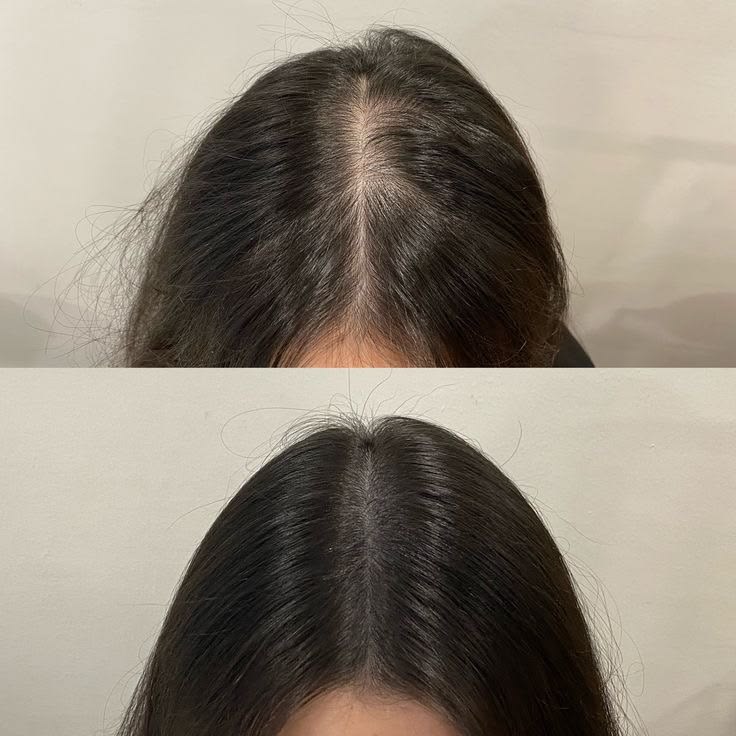
Before and after
Same patient, same lighting, same part. Density through the part and along the temples.
Results vary by person and by how early treatment starts. Nothing here is retouched, smoothed or filtered.
How dutasteride mesotherapy works
In pattern hair loss, DHT, a hormone made from testosterone, shrinks the follicle a little more with each growth cycle until the hair it makes is fine, short and eventually gone.
Dutasteride blocks the enzyme that turns testosterone into DHT, both forms of it. Less DHT at the follicle means the shrinking stops and the follicle can recover its size.
Mesotherapy places a small dose of dutasteride directly into the scalp with a series of tiny superficial injections along the thinning areas. The drug works where it is needed, with much less reaching the rest of the body than a daily pill.
Clascoterone works on the same hormone from the other side. Instead of stopping DHT from being made, it sits on the receptor in the follicle so DHT cannot bind to it. Applied to the scalp, it stays local, and it can be used alongside dutasteride mesotherapy or on its own.
Sessions are usually monthly for the first few, then spaced out to maintenance every few months. Shedding slows first, then density improves over three to six months. It pairs well with oral minoxidil.
Hair restoration is a medical treatment and candidacy is decided at consultation. Results vary. Individual results shown are that patient's own and are not a promise of outcome.